
Send My Projects Request
Why Does Eye Comfort Change with Age? Understanding Visual Fatigue in Adults
Friday, 09/11/2026
Introduction
As people get older, many notice that their eyes become tired more easily than before.
Long periods of reading, computer work, or smartphone use may start to feel more demanding, even when vision correction is still appropriate.
This does not always mean that there is a serious eye problem.
Eye comfort can be influenced by age-related changes in focusing ability, tear-film stability, screen habits, and overall visual workload.
Understanding these changes can help adults build healthier and more sustainable visual habits.
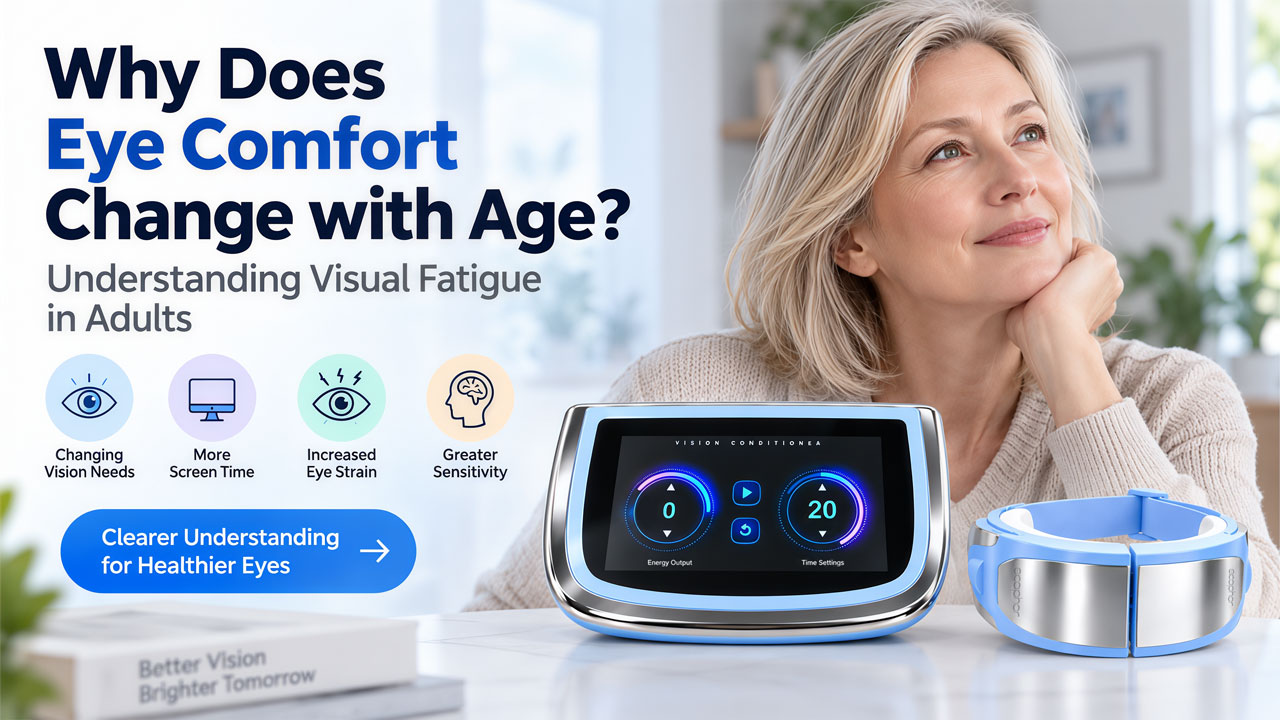
1. Why Does Age Affect Eye Comfort?
The visual system does not remain exactly the same throughout life.
As we age, the eyes may gradually become less flexible when shifting focus between near and distant objects. Tear-film stability and tolerance for long periods of visual work may also change.
Adults may begin to notice:
·Eye heaviness after computer work
·More difficulty reading small text
·Faster visual fatigue during close-up tasks
·Slower adjustment between near and far vision
·Reduced comfort later in the day
Age is not the only cause of visual fatigue, but it can change how the eyes respond to everyday visual demands.
2. Near-Focusing Ability Changes Over Time
Reading, using a smartphone, and working on a computer all require sustained near focus.
When people are younger, this focusing process is usually more flexible. With age, the ability to maintain or quickly adjust near focus can gradually decline.
As a result, tasks that once felt easy may become more tiring.
This may be especially noticeable during:
·Computer work
·Smartphone use
·Reading small text
·Working with spreadsheets
·Detailed visual tasks
Long periods of close-up work can therefore become more demanding as adults get older.
3. Tear-Film Changes Can Affect Visual Comfort
The tear film helps keep the surface of the eyes smooth, clear, and comfortable.
With age, tear production and tear-film stability may change for some people.
At the same time, digital-device use can reduce blinking frequency.
When blinking decreases, tears may evaporate more quickly, contributing to:
·Dryness
·Burning
·Gritty sensations
·Eye heaviness
·Temporary blurred vision
This means adult eye fatigue is often influenced by several factors at the same time.
4. Why Can Screen Time Feel More Tiring with Age?
Screen use itself is not the only reason eye comfort changes.
The problem often comes from a combination of:
Age-related changes + Prolonged near focus + Reduced blinking + Poor screen habits
For example, someone who works on a computer for six or more hours a day may feel noticeably more tired by the afternoon or evening.
Small text, screen glare, poor viewing distance, and insufficient breaks can make this discomfort more noticeable.
5. Common Signs of Visual Fatigue in Adults
Common symptoms may include:
·Tired or heavy eyes
·Dryness
·Temporary blurry vision
·Difficulty concentrating during visual tasks
·Increased sensitivity to bright light
·The need to close or rub the eyes more often
These symptoms do not always indicate eye disease.
However, persistent vision changes, significant pain, severe light sensitivity, or worsening symptoms should be evaluated by an eye-care professional.
6. How Can Adults Improve Everyday Eye Comfort?
Improving visual comfort does not mean avoiding digital devices completely.
Instead, adults can reduce unnecessary visual stress by building better habits.
Useful strategies include:
· Take Regular Visual Breaks
Avoid several hours of uninterrupted close-up work.
· Adjust Screen Settings
Use comfortable brightness, text size, and viewing distance.
· Blink More Naturally
Complete blinking helps maintain the tear film.
· Keep Vision Correction Up to Date
Changes in near vision or clarity may require a professional eye examination.
· Create a Regular Eye-Relaxation Routine
Give the eyes opportunities to recover from prolonged visual tasks.
7. From Eye Fatigue Relief to Daily Visual Wellness
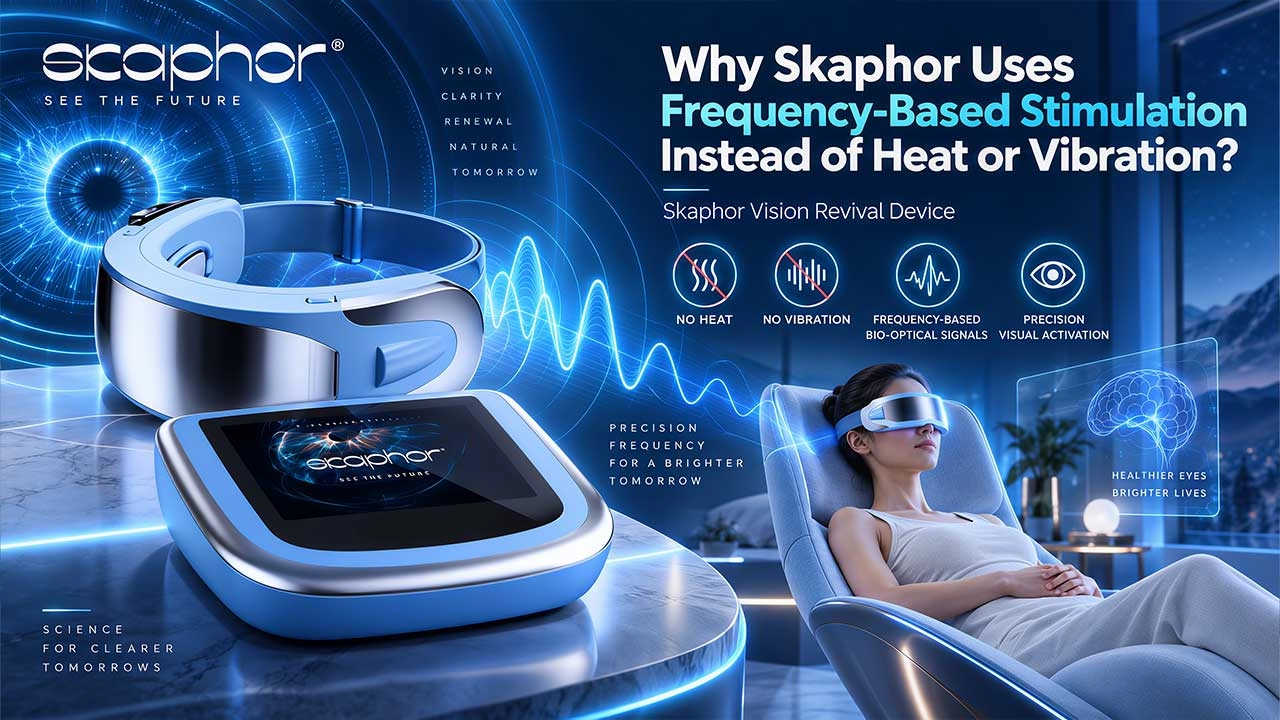
As people age and spend more time on digital devices, visual comfort becomes increasingly important. Modern eye care devices can offer more controlled stimulation beyond traditional heat or massage.
The Skaphor Vision Revival Device (VRD-001) uses 0–100 Hz bio-optical signals, Alpha Wave Stimulation, Dynamic Frequency Modulation, and low-intensity micro-pulse stimulation, with adjustable energy levels.
Its design focuses on:
· Controlled stimulation rather than stronger physical sensation
· Adjustable intensity based on individual comfort
· Regular visual relaxation after prolonged screen use
· Visual wellness support rather than traditional mechanical massage
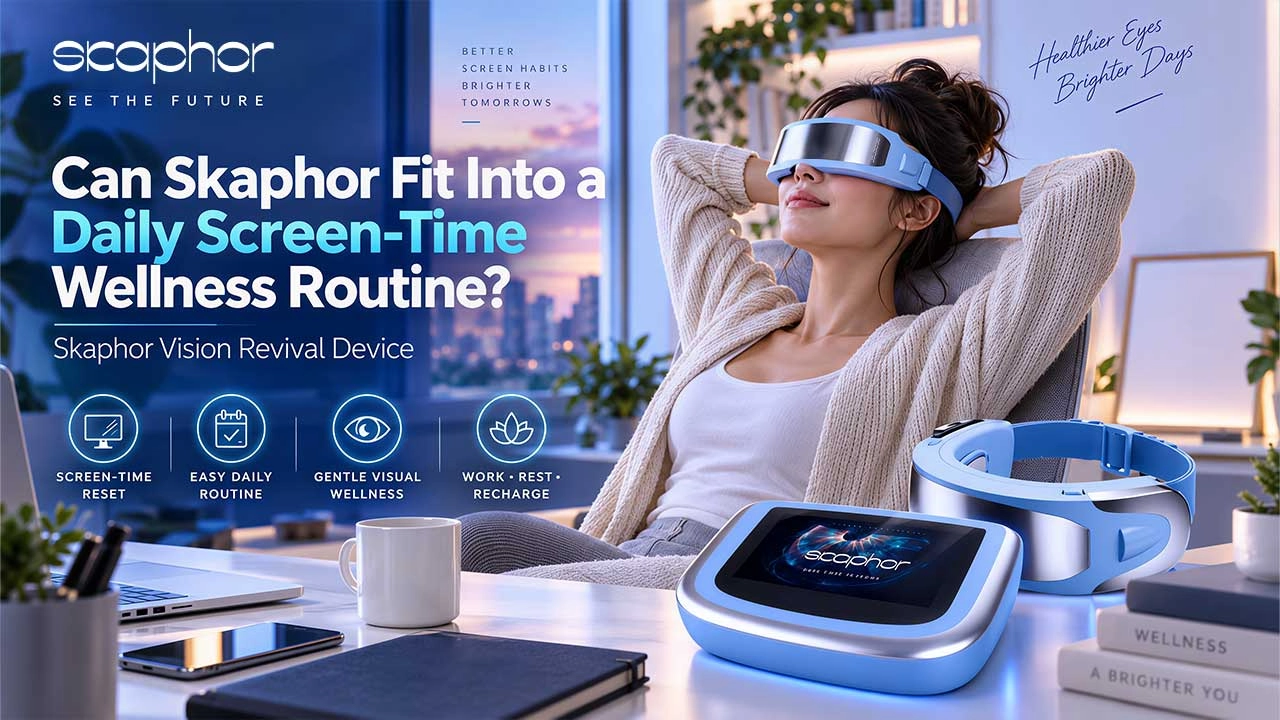
For adults who frequently use computers, smartphones, or perform close-up visual tasks, Skaphor can be incorporated into a regular visual wellness routine.
Skaphor is a non-invasive visual wellness device and does not replace professional eye examinations or medical treatment.
Final Thoughts
Why does eye comfort change with age?
Because focusing ability, tear-film stability, and tolerance for prolonged visual work can gradually change over time.
At the same time, modern lifestyles place greater visual demands on adults through extended use of computers and smartphones.
A more effective approach to eye comfort is to combine:
Healthy Screen Habits + Regular Breaks + Appropriate Vision Correction + Visual Wellness Routines
For adults who spend much of the day using digital devices, consistent visual-care habits can be more valuable than waiting until the eyes already feel exhausted.
Learn more about the Skaphor Vision Revival Device at www.skaphor.net
FAQ
How can adults improve everyday eye comfort?
Helpful habits include taking regular visual breaks, adjusting screen brightness and text size, maintaining a comfortable viewing distance, blinking fully, keeping vision correction up to date, and building a regular eye-relaxation routine.
Product Categories
Recommended for you
How Visual Comfort Can Influence Your Daily Productivity Experience?
What Makes a Visual Wellness Device Feel Premium?
Why Modern Eyes Need More Than Traditional Relaxation
Can Skaphor Fit Into a Daily Screen-Time Wellness Routine?
Why Skaphor Uses Frequency-Based Stimulation Instead of Heat or Vibration?
Product Categories
Product Categories
FAQ
About Products
Can you provide third-party test reports?
The SGS safety report is available.
Can children/pregnant women use it?
Children over 6 years old can use it. Pregnant women are advised to consult a physician.
Customized Service (For OEM/ODM)
How long does it take to customize?
60 days for standard customization (including mold development + prototype confirmation); expedited solutions need to be evaluated.
About Company
What is the background of the R&D team?
The core team consists of experts from Zhongshan Ophthalmic Center and PhDs in optoelectronic engineering, and owns 15 patents related to visual rehabilitation.
After-sales Support (For B2B Service)
How is the technical training implemented?
Online: Provide bilingual video tutorials and instruction manuals.
Offline: B-end customers can make an appointment with an engineer for on-site training. (travel expenses need to be borne.)
-
Contact Us for More Details
-
-
For custom designs, competitive pricing, or strategic partnerships, reach out to us. We'll get back to you promptly—usually within 24 hours.
-
Ruiheng Technology--Global Eye Protection Technology Innovator.
Contact Skaphor
Email: admin@skaphor.net
Address: Room 406, No. 101, Wanghu 1st Road, Baiyun District, Guangzhou, Guangdong Province, China.
© 2026 Skaphor. All Rights Reserved.
Skaphor
Skaphor