
Send My Projects Request
Why Some People Feel Eye Strain Faster Than Others
Tuesday, 12/30/2025
In the same visual environment, some people can work on screens for hours with little discomfort, while others quickly experience eye strain, tightness, or reduced focus. This difference is often blamed on poor habits, but in reality, it is closely related to individual visual sensitivity.
In this article, we explore common eye strain causes and explain why the visual system responds differently from person to person—and what this means for daily eye care in modern visual environments.

1. Eye Strain Is Not Experienced the Same Way by Everyone
Eye strain is not a uniform experience. Under identical conditions—same screen brightness, working hours, and posture—people may report very different sensations:
- Mild fatigue for some
- Rapid discomfort for others
- Quick recovery in certain individuals, slower recovery in others
This variation shows that eye strain is influenced not only by external factors but also by how each visual system processes and tolerates stimulation.
2. What Is Individual Visual Sensitivity?
Individual visual sensitivity refers to how the visual system reacts to light intensity, contrast, frequency changes, and prolonged stimulation.
It reflects several internal characteristics, including:
- Neural responsiveness to visual input
- Tolerance to sustained visual load
- Speed of recovery after visual effort
People with higher visual sensitivity tend to accumulate neural load more quickly under the same conditions.
3. Common Eye Strain Causes in Modern Visual Use
From a physiological perspective, common eye strain causes often include:
- Prolonged focus at a fixed distance
- Mismatch between screen brightness and ambient lighting
- High-density or repetitive visual input
- Frequent task switching without visual recovery
When these factors combine with higher individual visual sensitivity, discomfort may appear sooner and feel more intense.
4. Why Do Some People Recover More Slowly?
Eye strain is not only about how fast fatigue develops, but also about how efficiently the visual system recovers.
Visual recovery depends on:
- Gradual reduction of neural activity
- Restoration of visual rhythm
- Rebalancing adaptation to visual input
For individuals with higher visual sensitivity, this recovery process often takes longer—explaining why rest alone may not always feel sufficient.
5. Visual Sensitivity Is a Trait, Not a Problem
It is important to note that higher individual visual sensitivity is not a disorder or defect.
It represents a natural variation in how visual systems function:
- Greater responsiveness to changes
- Faster reaction to visual load
- Stronger reliance on stable visual rhythms
The goal of eye care is not to eliminate sensitivity, but to work in harmony with it.
6. Adjusting Daily Eye Care to Individual Differences
Modern eye care strategies should not be one-size-fits-all.
For people with higher visual sensitivity, supportive approaches often include:
- Reducing long, uninterrupted visual exposure
- Maintaining stable lighting environments
- Providing rhythm-friendly visual support
This is why many visual wellness solutions focus on supporting visual balance rather than delivering strong or immediate sensations.
7. Understanding Visual Differences Through the Skaphor Perspective
The eye care philosophy represented by Skaphor is built on recognizing individual differences in visual sensitivity.
By offering stable and controllable optical input, such visual wellness devices aim to:
- Reduce long-term neural load accumulation
- Support consistent visual rhythm
- Help different visual systems remain balanced in high-frequency visual environments
This approach does not correct differences—it respects them.
Some people feel eye strain faster not because they use their eyes incorrectly, but because their visual systems respond differently to stimulation.
Understanding eye strain causes and individual visual sensitivity allows for more appropriate and sustainable eye care choices. When eye care shifts from uniform solutions to sensitivity-aware support, visual comfort often improves naturally.
Prdoucts Categories
Recommended for you
Seeing Clearly ≠ Seeing Comfortably: Why Visual Endurance Is Gaining Medical Attention
What Is Magnetic Electrode Design? A New Trend in Eye Care Devices
Are Eye Treatment Machines Suitable for Everyone?
Eye Care Instruments: Why Skin-Contact Materials Matter More Than Specs
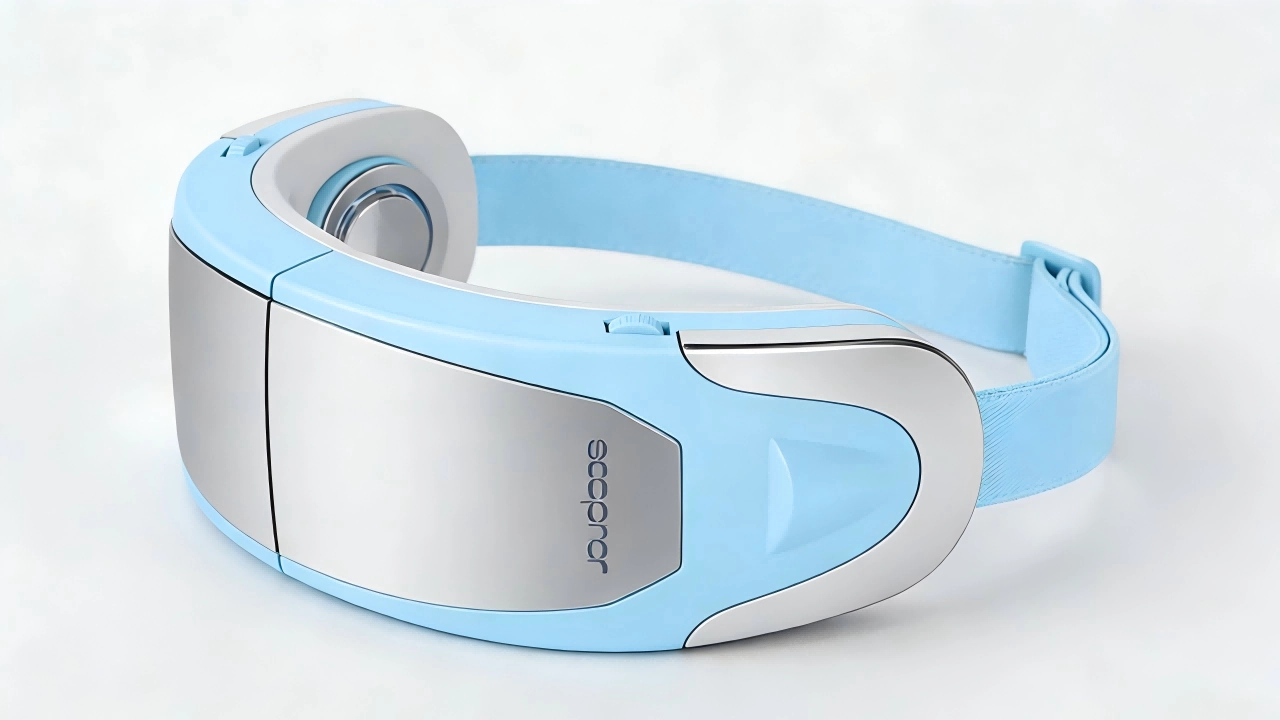
Eye Caring Instrument Design: Three Details That Matter Most
Prdoucts Categories
Prdoucts Categories
FAQ
About Company
What is the background of the R&D team?
The core team consists of experts from Zhongshan Ophthalmic Center and PhDs in optoelectronic engineering, and owns 15 patents related to visual rehabilitation.
About Products
Do I need to take medication?
Pure physical therapy. The electrode part is used with the aid of wet sanitary pads.
About Skaphor
What support do you offer after purchase?
We provide full technical support, user manuals, and responsive after-sales service. Warranty policies and remote assistance are available to ensure your satisfaction.
About Bulk Order
What is the minimum order quantity MOQ and ladder price?
MOQ 500 units for the standard version, 1000 units for the customized version; please contact our foreign trade specialist for specific discounts.
Technical Verification
What is the source of clinical data?
6-month double-blind trial report issued by the partner tertiary hospital (can be provided after signing the NDA).
-
Contact Us for More Details
-
-
For custom designs, competitive pricing, or strategic partnerships, reach out to us. We'll get back to you promptly—usually within 24 hours.
-
Ruiheng Technology--Global Eye Protection Technology Innovator.
Contact Skaphor
Email: admin@skaphor.net
Address: Room 406, No. 101, Wanghu 1st Road, Baiyun District, Guangzhou, Guangdong Province, China.
© 2026 Skaphor. All Rights Reserved.
zhu Juliy
Skaphor_ Juliy