
Send My Projects Request
From Passive Protection to Active Support: The Evolution of Eye Care Technology
Friday, 12/26/2025
For a long time, eye care was understood mainly as protection—avoiding damage, reducing irritation, and preventing vision from getting worse. However, as visual environments have changed dramatically, this passive approach is no longer sufficient.
Today’s screen-intensive, artificial-light–dominated lifestyle has pushed eye care technology to evolve. The focus is gradually shifting from passive protection to active support, reflecting a broader visual wellness trend. This article explores how eye care technology has developed and why this transition matters for modern visual health.

1. The Early Stage: Eye Care as Passive Protection
Traditional eye care solutions were primarily designed to reduce external stressors. Common strategies included:
- Blocking or filtering light
- Minimizing glare and brightness
- Relieving short-term discomfort
At this stage, eye care technology followed a defensive logic: when visual stress occurred, the goal was simply to reduce exposure. In environments dominated by natural light and intermittent visual tasks, this approach was often adequate.
2. A Changing Visual Environment
Modern visual conditions have fundamentally altered how eyes are used:
- Screens dominate daily vision
- Artificial lighting replaces natural light cycles
- Visual tasks are longer and more continuous
- Visual stimulation rarely stops
Under these conditions, visual strain is no longer occasional—it becomes cumulative. Passive protection alone cannot address the sustained neural demand placed on the visual system.
3. The Turning Point: From Avoiding Stimulus to Managing Load
As visual science advanced, the focus of eye care technology began to change. Instead of asking whether stimulation exists, researchers and developers started asking:
- Is the stimulation stable?
- Is it predictable?
- Does it support visual rhythm?
This marked a key transition in eye care technology—from simply avoiding stressors to actively supporting how the visual system operates under continuous load.
4. Vision as a Neural Process
A major insight driving this evolution is the understanding that vision is not a passive sensory event. It is a continuous neural process:
Light input → retinal processing → neural signaling → brain integration
Effective eye care must therefore consider neural activity, signal rhythm, and recovery capacity. Active support focuses on helping the visual system maintain balance, rather than merely blocking external factors.
5. What “Active Support” Means in Technology Design
In practice, active-support eye care technologies tend to emphasize:
- Non-invasive interaction
- Gentle and controllable input
- Stable, rhythm-friendly stimulation
- Suitability for regular, long-term use
These features align with the current visual wellness trend, which prioritizes sustainability and balance over short-term relief.
6. The Direction Represented by Skaphor
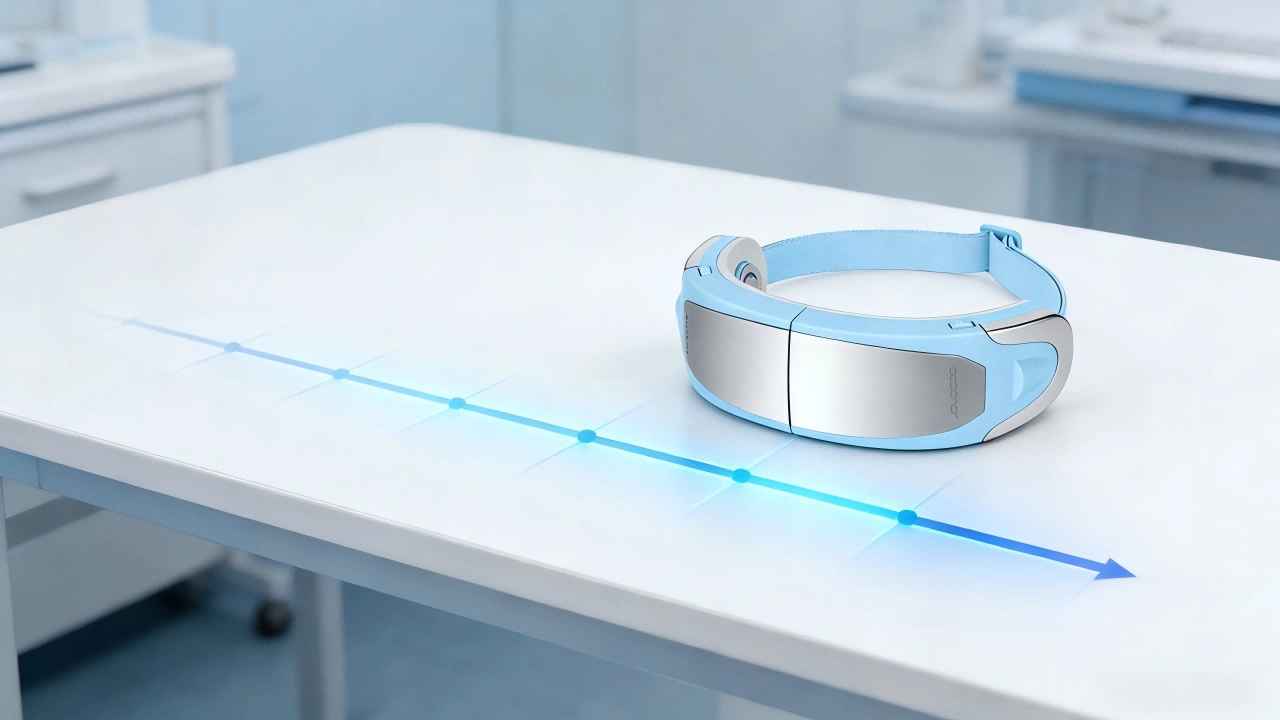
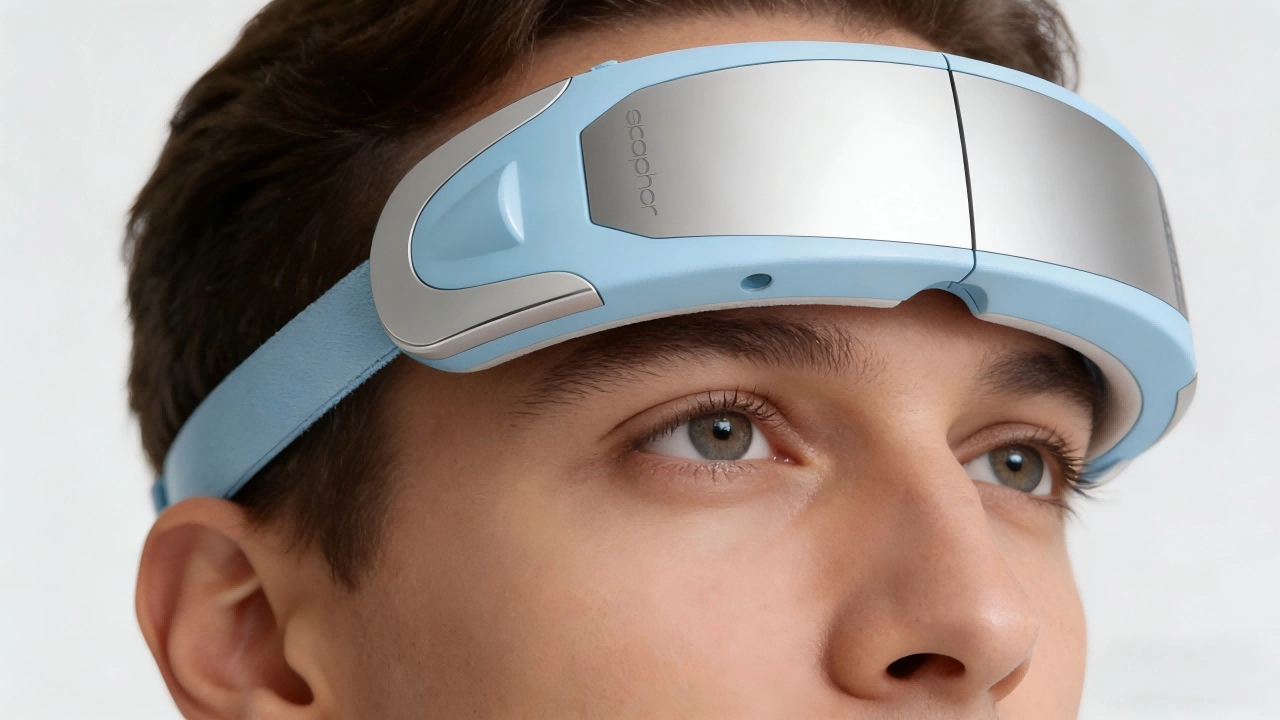
Light-based eye care devices represented by Skaphor reflect this evolutionary direction. Rather than focusing solely on shielding the eyes, this approach emphasizes:
- Supporting visual system stability
- Reducing long-term neural load
- Encouraging smoother visual recovery
This does not replace traditional protective strategies, but extends their role within a more comprehensive framework of modern eye care technology.
7. Why Active Support Is Becoming the Mainstream Approach
In contemporary life, visual stimulation is unavoidable. As a result, the key question has shifted:
How can the visual system remain resilient when stimulation cannot be eliminated?
Active support addresses this reality by helping the visual system adapt and recover more efficiently, making it increasingly central to the future of eye care technology.
The evolution of eye care technology reflects a deeper understanding of how vision functions in modern environments. Moving from passive protection to active support marks an important step toward sustainable visual wellness.
By focusing on balance, rhythm, and neural-friendly design, today’s eye care solutions are better aligned with the long-term needs of the visual system.
Prdoucts Categories
Recommended for you
Seeing Clearly ≠ Seeing Comfortably: Why Visual Endurance Is Gaining Medical Attention
What Is Magnetic Electrode Design? A New Trend in Eye Care Devices
Are Eye Treatment Machines Suitable for Everyone?
Eye Care Instruments: Why Skin-Contact Materials Matter More Than Specs
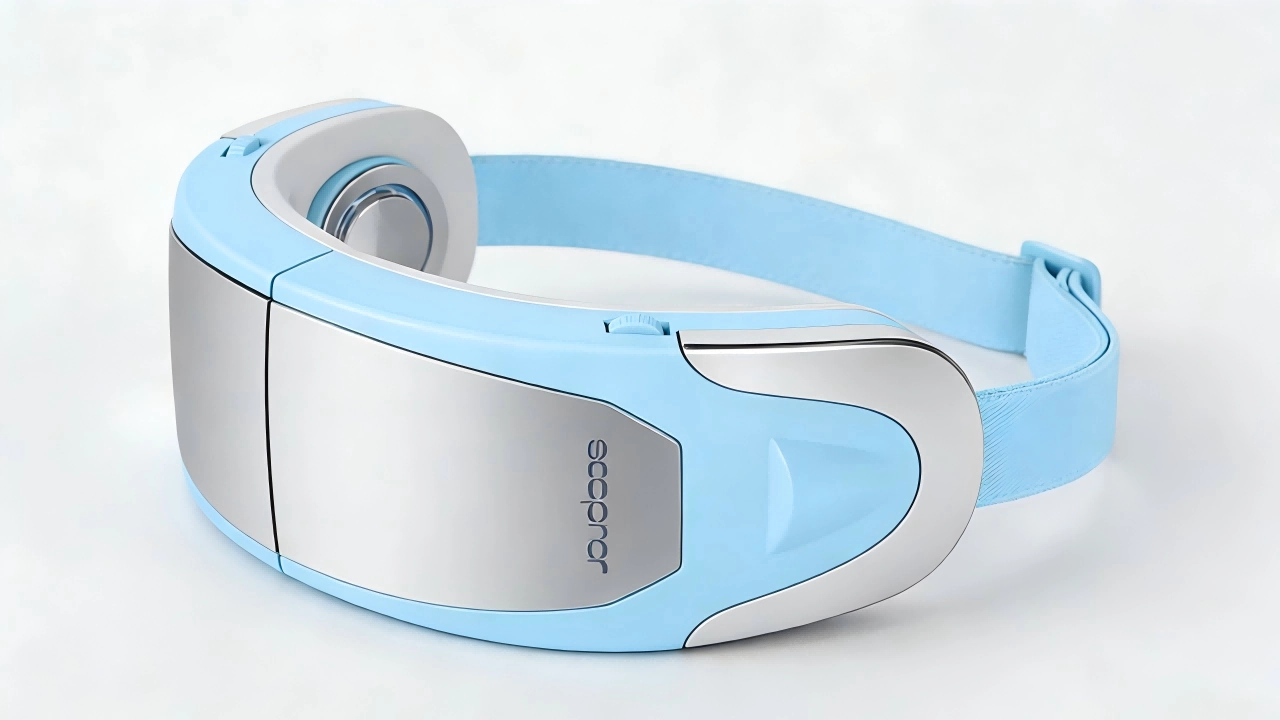
Eye Caring Instrument Design: Three Details That Matter Most
Prdoucts Categories
Prdoucts Categories
FAQ
Customized Service (For OEM/ODM)
What is the minimum order quantity for ODM?
Hardware customization starts at 1000 units, and software UI customization starts at 100 units.
About Bulk Order
Do you accept L/C payment?
Support TT/LC/AliPay/PayPal/Western Union, 30% deposit is required for the first order.
About Products
How long does it take to see results?
Patients with dry eye symptoms can get significant relief by wearing this product for a standard course of treatment (20 minutes/times), and it is recommended to use it by the full course of treatment (clinical data shows that about 87% of users feedback significant improvement in visual clarity after 2 weeks of continuous use).
Can you provide third-party test reports?
The SGS safety report is available.
About Skaphor
What support do you offer after purchase?
We provide full technical support, user manuals, and responsive after-sales service. Warranty policies and remote assistance are available to ensure your satisfaction.
-
Contact Us for More Details
-
-
For custom designs, competitive pricing, or strategic partnerships, reach out to us. We'll get back to you promptly—usually within 24 hours.
-
Ruiheng Technology--Global Eye Protection Technology Innovator.
Contact Skaphor
Email: admin@skaphor.net
Address: Room 406, No. 101, Wanghu 1st Road, Baiyun District, Guangzhou, Guangdong Province, China.
© 2026 Skaphor. All Rights Reserved.
zhu Juliy
Skaphor_ Juliy