
Send My Projects Request
From Seeing Clearly to Seeing Comfortably How Modern Vision Health Standards Are Changing
Saturday, 01/17/2026
For a long time, vision health was evaluated with a simple question:
“Can you see clearly?”
Visual acuity charts and refractive measurements became the primary indicators of eye health. However, in today’s screen-intensive environment, many people are discovering a gap between test results and real experience. Even with normal vision exams, eyes may still feel tired, uncomfortable, or unable to sustain long periods of use.
This shift in experience is driving a broader change in how vision health is assessed—moving beyond clarity toward visual comfort and visual endurance.
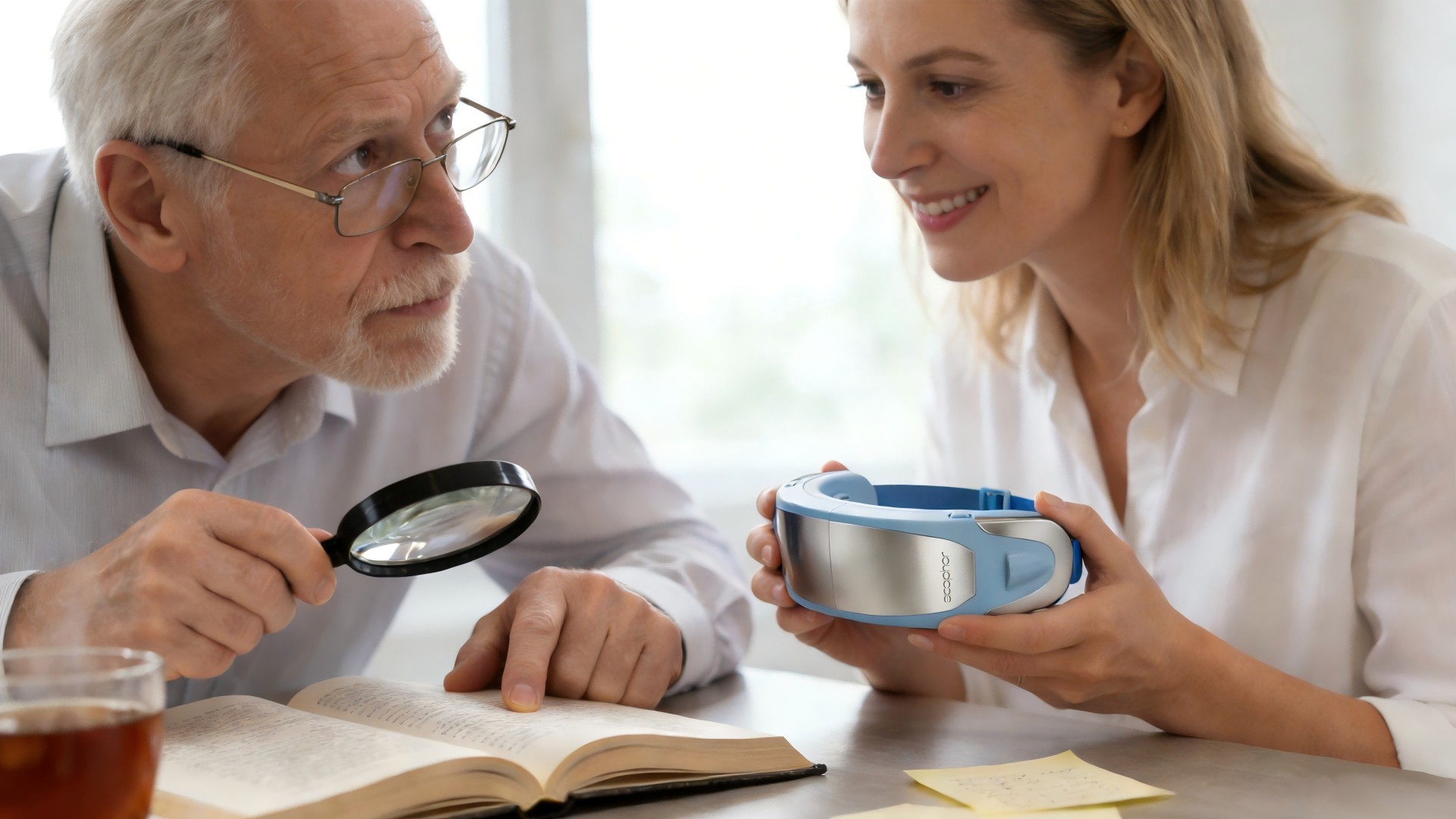
1. Why “Seeing Clearly” Is No Longer Enough
Traditional vision assessments focus on static measurements such as:
- Visual acuity
- Refractive status
- Corrected clarity
While these metrics remain important, they describe vision at a single moment in time. They do not capture how the visual system performs during prolonged or demanding tasks.
This is why many people report:
seeing clearly, but eyes feel uncomfortable—a condition that standard eye exams may not fully explain.
2. Modern Vision Health Emphasizes “Seeing for Longer.”
In daily life, visual health is increasingly defined by questions such as:
- How long can the eyes maintain comfort?
- How quickly does fatigue appear?
- How efficiently does vision recover after use?
These questions relate directly to visual endurance—the ability of the visual system to sustain function under continuous load without discomfort.
3. Visual Comfort as a Core Indicator
Visual comfort reflects whether the visual system remains balanced during use, rather than simply achieving clarity.
It is influenced by factors including:
- Lighting conditions
- Screen contrast and brightness
- Visual rhythm and task continuity
- Neural workload during processing
This explains the growing discussion around eye comfort vs visual acuity, where comfort becomes as meaningful as clarity.
4. Evaluating Vision Through Fatigue Patterns
Modern visual assessment increasingly considers:
- How soon fatigue appears during tasks
- How frequently discomfort occurs
- Whether attention declines with continued use
- How much recovery time is needed
These factors form the basis of visual fatigue assessment, offering insights that static tests alone cannot provide.
5. Eye Strain and Visual Performance
As visual endurance decreases, eye strain and visual performance become closely linked.
Common signs include:
- Reduced reading efficiency
- Lower contrast sensitivity
- Increased light sensitivity
- Slower recovery after visual effort
Notably, these changes can occur even when visual acuity remains unchanged.
6. Why Vision Health Standards Are Evolving
This evolution reflects real-world visual demands rather than a temporary trend.
Modern vision health standards are shifting from:
- Single-point measurements
- Static numerical values
Toward:
- Sustained performance
- Long-term comfort
- System-level tolerance and recovery
This marks a fundamental update in how modern vision health standards are defined.
7. The Perspective Represented by Skaphor
The vision health philosophy represented by Skaphor aligns with this updated framework.
Rather than focusing solely on clarity, Skaphor emphasizes:
- Maintaining long-term visual comfort
- Supporting visual endurance
- Reducing cumulative visual load in high-frequency use environments
This approach does not replace traditional eye exams—it expands them by addressing functional performance over time.
Vision health today is no longer just about seeing clearly. It is about seeing comfortably and sustainably.
By incorporating visual comfort and visual endurance into how vision is evaluated, many previously unexplained visual complaints begin to make sense. This broader perspective reflects how eyes are actually used in modern life—and how visual health should be supported going forward.
Prdoucts Categories
Recommended for you
Eye Care Instruments: Why Skin-Contact Materials Matter More Than Specs
Eye Caring Instrument Design: Three Details That Matter Most
Why Ophthalmology Equipment Manufacturers Are Entering Non-Invasive Eye Care
How Eye Care Instruments Support Vision Training—Without Replacing It

Eye Massage to Improve Eyesight: Common Myths About Eye Fatigue Relief
Prdoucts Categories
Prdoucts Categories
FAQ
About Company
Do you accept factory inspection?
We support factory inspection and audit, you need to make an appointment in advance and sign a confidentiality agreement (provide a demonstration of GMP workshop and quality control process).
Logistics and Customs Clearance
How to guarantee the breakage rate?
We promise that the defective rate will be ≥99.5%, otherwise, we will make up for the defective rate proportionally.
Is the package shockproof and moisture-proof?
It adopts EPP foam + an anti-static bag with three levels of protection and passes a 1.5-meter drop test.
About Products
Does it support the cooperation of clinical organizations in research?
Open to clinical data cooperation, provide equipment and technical program support (need to sign MOU).
Marketing Support
Do you provide sales kits?
Provide kits containing qualification documents, clinical data, product promotional materials, clinical cases, etc.
-
Contact Us for More Details
-
-
For custom designs, competitive pricing, or strategic partnerships, reach out to us. We'll get back to you promptly—usually within 24 hours.
-
Ruiheng Technology--Global Eye Protection Technology Innovator.
Contact Skaphor
Email: admin@skaphor.net
Address: Room 406, No. 101, Wanghu 1st Road, Baiyun District, Guangzhou, Guangdong Province, China.
© 2026 Skaphor. All Rights Reserved.
zhu Juliy
Skaphor_ Juliy