
Send My Projects Request
Understanding the Different Roles of Eye Care Instruments in Optometry and Daily Care
Tuesday, 01/20/2026
As awareness of visual health continues to grow, the term eye care instruments appears more frequently in both professional and consumer discussions. However, many users remain unclear about how these devices differ when used in optometry settings versus daily eye care routines.
This article explains the distinct roles of eye care instruments and eye caring instruments across professional and everyday contexts, helping readers develop a clearer and more practical understanding of their purpose.

1. What Are Eye Care Instruments?
In a broad sense, eye care instruments refer to devices designed to support visual function, comfort, or visual condition awareness.
Importantly, this term does not exclusively describe medical equipment, nor does it only refer to household eye products. Instead, it represents a category of tools with different functions, depending on their intended use and environment.
2. Eye Care Instruments in Optometry Settings
In optometry and professional environments, eye care instruments are commonly used to:
- Support visual function evaluation
- Assist in observing visual performance
- Provide reference data for vision-related assessments
In these settings, devices focus on functional insight rather than direct comfort improvement. Their primary value lies in stability, consistency, and alignment with professional vision assessment workflows.
3. Eye Caring Instruments in Daily Eye Care
By contrast, an eye care instrument used in daily routines serves a different role.
These devices are designed to support:
- Eye comfort during regular use
- Visual relaxation after prolonged screen time
- Management of daily visual load
Rather than providing diagnostic information, daily eye care instruments help users maintain comfort and reduce cumulative strain.
4. Key Difference: Purpose Defines the Role
The fundamental difference between these two usage scenarios lies in purpose:
- Optometry settings ask:
What is the current state of visual function?
- Daily care settings ask:
How can visual comfort and endurance be supported over time?
Although both may be called eye care instruments, their design logic, usage patterns, and evaluation criteria differ significantly.
5. Why Confusion Often Occurs
Misunderstandings typically arise due to:
- Similar naming conventions (instrument, device, treatment)
- Lack of clear separation between usage scenarios
- Oversimplified expectations of what “eye care” should achieve
When all eye care instruments are viewed as diagnostic or corrective tools, unrealistic assumptions often follow.
6. Role Repositioning in Modern Eye Care
Under modern visual wellness concepts, eye care instruments are increasingly categorized by role rather than label:
- Professional support tools for visual assessment contexts
- Daily support tools for comfort and load management
This distinction reflects function—not hierarchy—and helps users select devices more appropriately.
7. The Skaphor Perspective
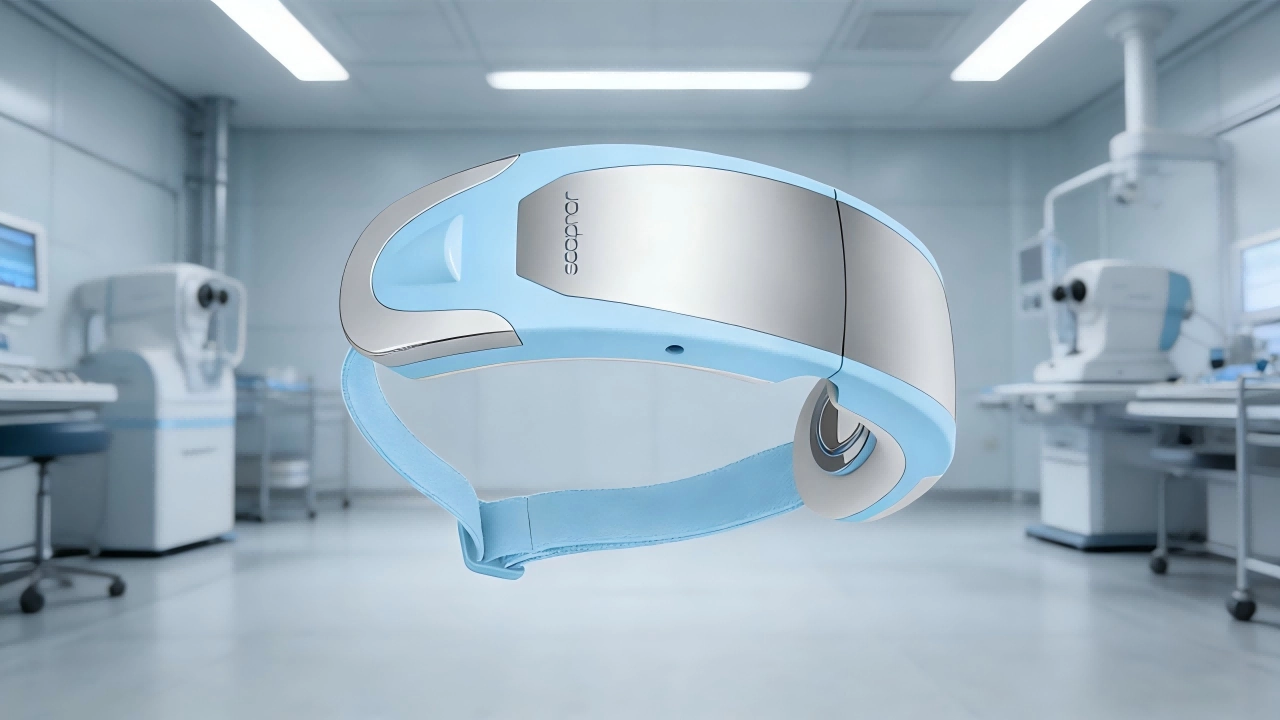
Skaphor positions its approach within the daily-support eye care instrument category.
Rather than replacing optometric evaluations, the focus is on:
- Supporting visual stability in everyday environments
- Managing long-term visual load
- Enhancing visual comfort and endurance
This positioning aligns naturally with the role of eye care instruments in modern visual health routines.
Understanding how eye care instruments function differently in optometry and daily care contexts allows for more informed and realistic expectations.
By recognizing the role of purpose and usage environment, eye care becomes a structured and effective practice—rather than a one-size-fits-all solution.
Prdoucts Categories
Recommended for you
What Is Magnetic Electrode Design? A New Trend in Eye Care Devices
Are Eye Treatment Machines Suitable for Everyone?
Eye Care Instruments: Why Skin-Contact Materials Matter More Than Specs
Eye Caring Instrument Design: Three Details That Matter Most
Why Ophthalmology Equipment Manufacturers Are Entering Non-Invasive Eye Care
Prdoucts Categories
Prdoucts Categories
FAQ
About Company
Can you provide me with the company's qualifications and patent certificates?
We can provide business license, Class II Medical Device Manufacturing Record Certificate, and a list of patents (in English and Chinese).
About Products
Can you provide third-party test reports?
The SGS safety report is available.
Do I need to take medication?
Pure physical therapy. The electrode part is used with the aid of wet sanitary pads.
Logistics and Customs Clearance
How long is the delivery cycle?
20 days delivery after placing order (including quality inspection).
Marketing Support
Is there any joint promotion subsidy?
Annual purchases of more than 10,000 units can apply for a 50% rebate on advertising costs.
-
Contact Us for More Details
-
-
For custom designs, competitive pricing, or strategic partnerships, reach out to us. We'll get back to you promptly—usually within 24 hours.
-
Ruiheng Technology--Global Eye Protection Technology Innovator.
Contact Skaphor
Email: admin@skaphor.net
Address: Room 406, No. 101, Wanghu 1st Road, Baiyun District, Guangzhou, Guangdong Province, China.
© 2026 Skaphor. All Rights Reserved.
zhu Juliy
Skaphor_ Juliy