
Send My Projects Request
How Light-Based Eye Care Devices Interact With Neural Signaling Pathways —— Understanding Skaphor’s Optical Approach to Visual Comfort
Saturday, 12/13/2025
In screen-intensive environments, many forms of visual discomfort are no longer limited to the eye surface, but are closely linked to prolonged neural load within the visual system.
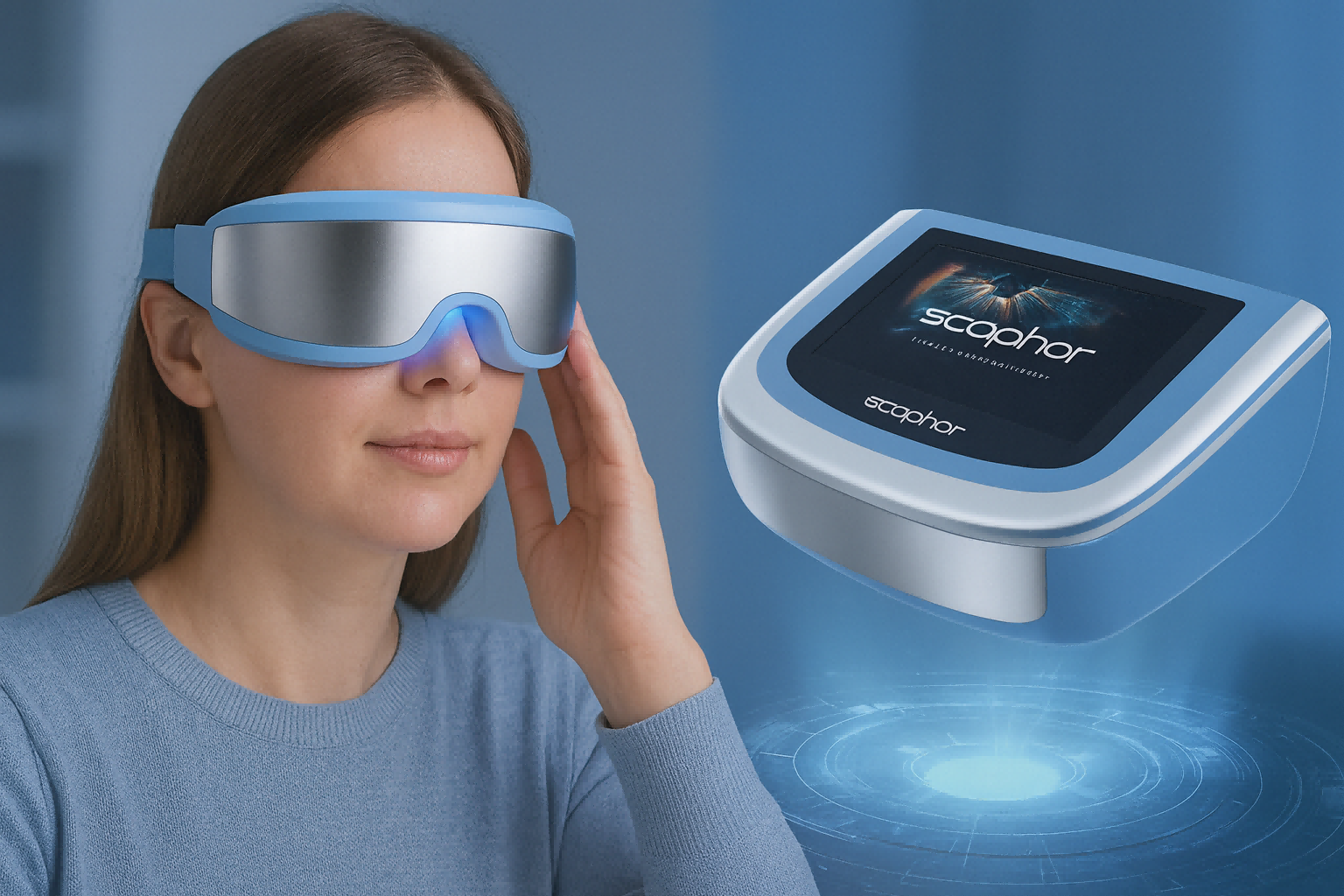
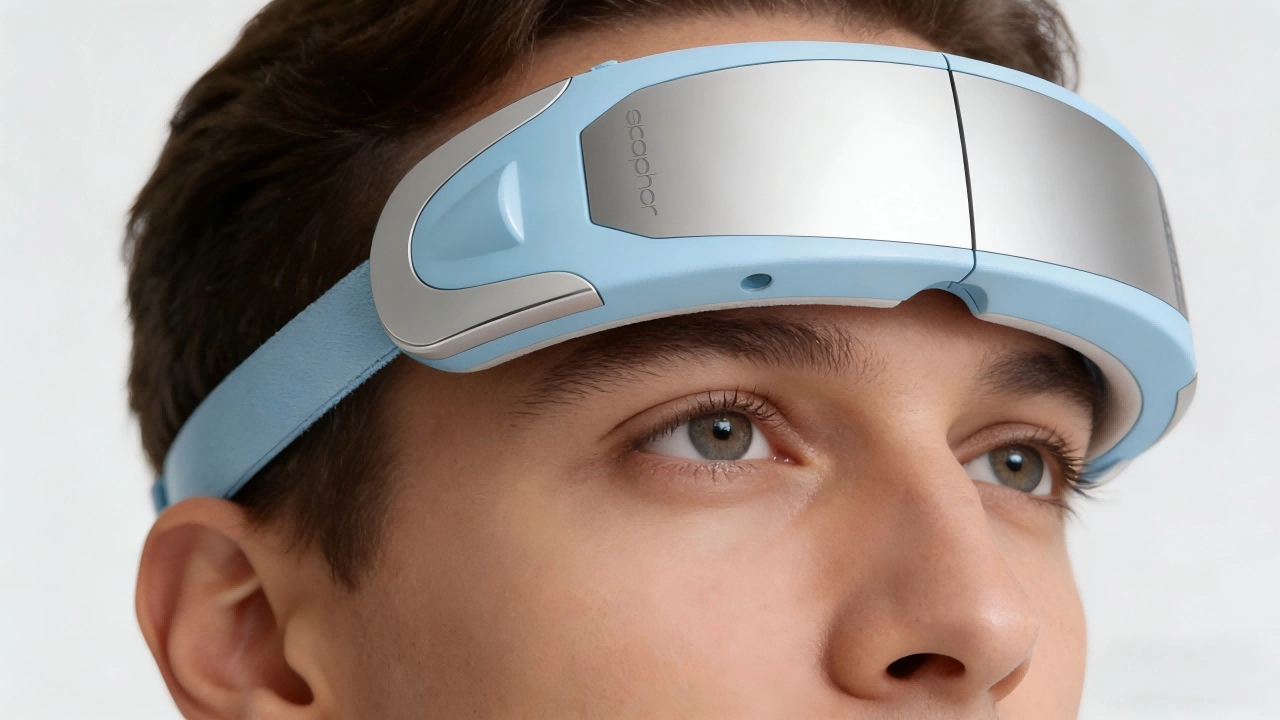
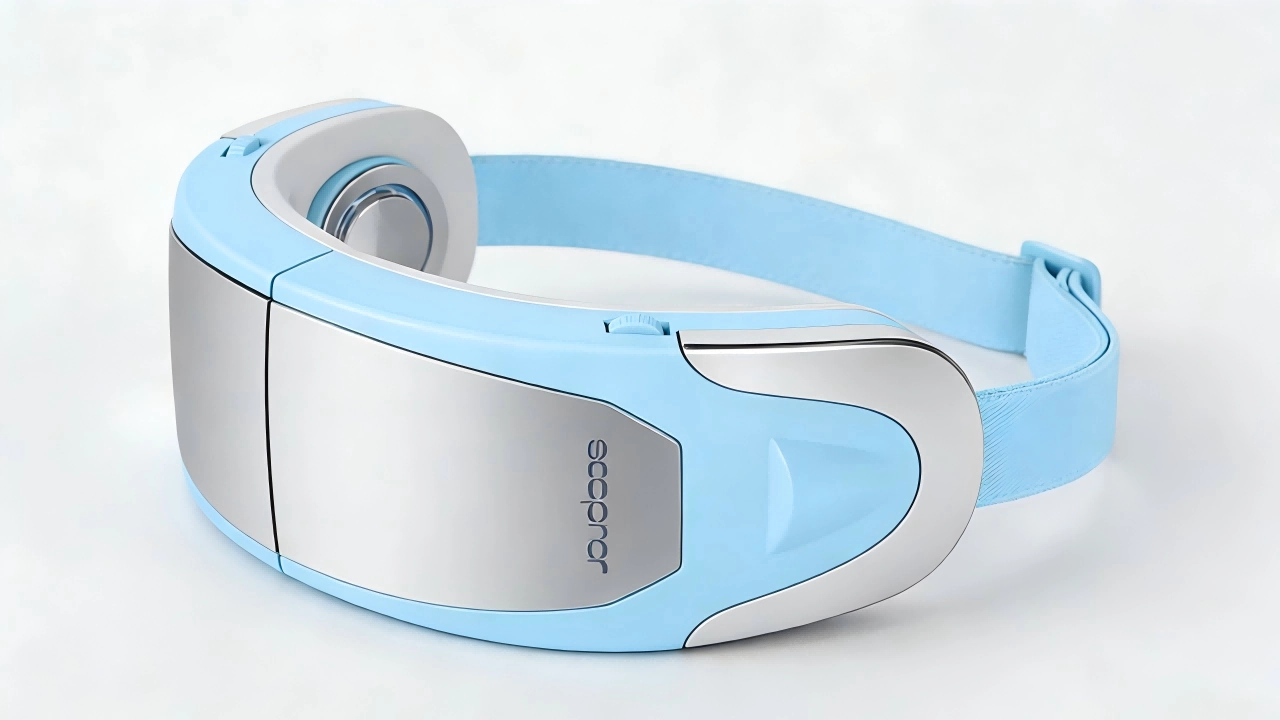
Rather than relying on vibration or mechanical pressure, Skaphor represents a light-based eye care approach that uses stable, controllable optical signals to interact gently with visual neural pathways.
This article explores how light-based eye care devices interact with neural signaling systems and explains why Skaphor adopts an optical pathway instead of mechanical stimulation.
1. Vision as a Neural Process
Human vision is not simply the act of “seeing light.” It is a neural process:
Light enters the eye →
Photoreceptors receive the signal →
Light is converted into neural impulses →
Signals travel through the optic nerve →
The brain interprets visual information
Any effective eye care approach must therefore engage this neural signaling pathway rather than focusing solely on surface-level sensations.
2. The Retina as the Entry Point of Optical Signaling
Skaphor’s optical approach primarily interacts with the retinal photoreceptive system, including:
-
Cone cells for clarity and color perception
-
Rod cells for contrast and low-light adaptation
-
Rhythm-related retinal ganglion cells
These structures are inherently designed to convert light into neural signals.
When optical input remains stable, low-intensity, and predictable, the visual system can respond in an organized and balanced manner.
3. Why Skaphor Uses Fixed Optical Frequencies With Manual Adjustment
Instead of dynamic automated stimulation, Skaphor applies:
-
Fixed, validated optical frequency ranges
-
User-controlled intensity selection
-
Clearly defined session duration
This design reflects a key understanding:
Visual neural systems respond more favorably to predictable rhythmic input than to constantly changing stimulation.
Stable optical rhythms may help reduce neural noise and support visual signal regulation.
4. Optical Pathways vs. Mechanical Stimulation
Many eye care solutions rely on vibration or physical pressure, targeting periocular tissues rather than neural pathways.
Skaphor avoids mechanical stimulation because:
-
Optical signals do not exert physical pressure
-
Eye structure remains unaffected
-
No external force is applied
-
Long-term, repeated use is more suitable
This optical approach prioritizes neural compatibility and comfort.
5. Supporting Neural Signals Rather Than Forcing Relaxation
Skaphor does not aim to overstimulate visual nerves.
Instead, stable optical input may help:
-
Ease neural overactivation after prolonged screen use
-
Improve signal synchronization
-
Reduce lingering visual fatigue
-
Enhance overall comfort
Users often describe the experience as calming rather than stimulating.
6. Understanding the Role of Light-Based Eye Care Devices
In modern visual research, non-invasive optical interventions are increasingly used to support neural rhythm regulation and response stability.
Skaphor’s light-based eye care devices work through stable, controllable optical input that cooperates with visual neural pathways.
Their value lies in long-term visual state support and comfort management, especially when combined with healthy visual habits and environmental awareness.
Effective eye care is not about forcing relaxation through external pressure, but about allowing the visual neural system to restore balance naturally.
Skaphor’s optical approach reflects this philosophy—using controlled light signals to support neural harmony rather than competing with the visual system.
Prdoucts Categories
Recommended for you
Seeing Clearly ≠ Seeing Comfortably: Why Visual Endurance Is Gaining Medical Attention
What Is Magnetic Electrode Design? A New Trend in Eye Care Devices
Are Eye Treatment Machines Suitable for Everyone?
Eye Care Instruments: Why Skin-Contact Materials Matter More Than Specs
Eye Caring Instrument Design: Three Details That Matter Most
Prdoucts Categories
Prdoucts Categories
FAQ
About Products
What is the difference between Skaphor and other eye care devices?
Ordinary eye care device only massages the eye area, while Skaphor directly stimulates the visual cortex through 0-100Hz bio-optical signals (clinical effectiveness rate of 92%).
After-sales Support (For B2B Service)
How is the technical training implemented?
Online: Provide bilingual video tutorials and instruction manuals.
Offline: B-end customers can make an appointment with an engineer for on-site training. (travel expenses need to be borne.)
About Bulk Order
What is the minimum order quantity MOQ and ladder price?
MOQ 500 units for the standard version, 1000 units for the customized version; please contact our foreign trade specialist for specific discounts.
Customized Service (For OEM/ODM)
How long does it take to customize?
60 days for standard customization (including mold development + prototype confirmation); expedited solutions need to be evaluated.
Marketing Support
Is there any joint promotion subsidy?
Annual purchases of more than 10,000 units can apply for a 50% rebate on advertising costs.
-
Contact Us for More Details
-
-
For custom designs, competitive pricing, or strategic partnerships, reach out to us. We'll get back to you promptly—usually within 24 hours.
-
Ruiheng Technology--Global Eye Protection Technology Innovator.
Contact Skaphor
Email: admin@skaphor.net
Address: Room 406, No. 101, Wanghu 1st Road, Baiyun District, Guangzhou, Guangdong Province, China.
© 2026 Skaphor. All Rights Reserved.
zhu Juliy
Skaphor_ Juliy