
Send My Projects Request
What Really Happens to Your Eyes After a Full Day of Screen Exposure?
Thursday, 12/11/2025
From checking your phone in the morning, working on a computer during the day, to scrolling or streaming at night, screens have become the primary visual environment of modern life. By the end of the day, many people experience dryness, soreness, blurred vision, or even headaches—yet few truly understand what is happening inside their eyes.
This article explains the physiological process behind digital eye strain, breaking down how prolonged screen time vision affects the tear film, focusing system, retina, and visual nerves—and why recovery often feels slower than expected.
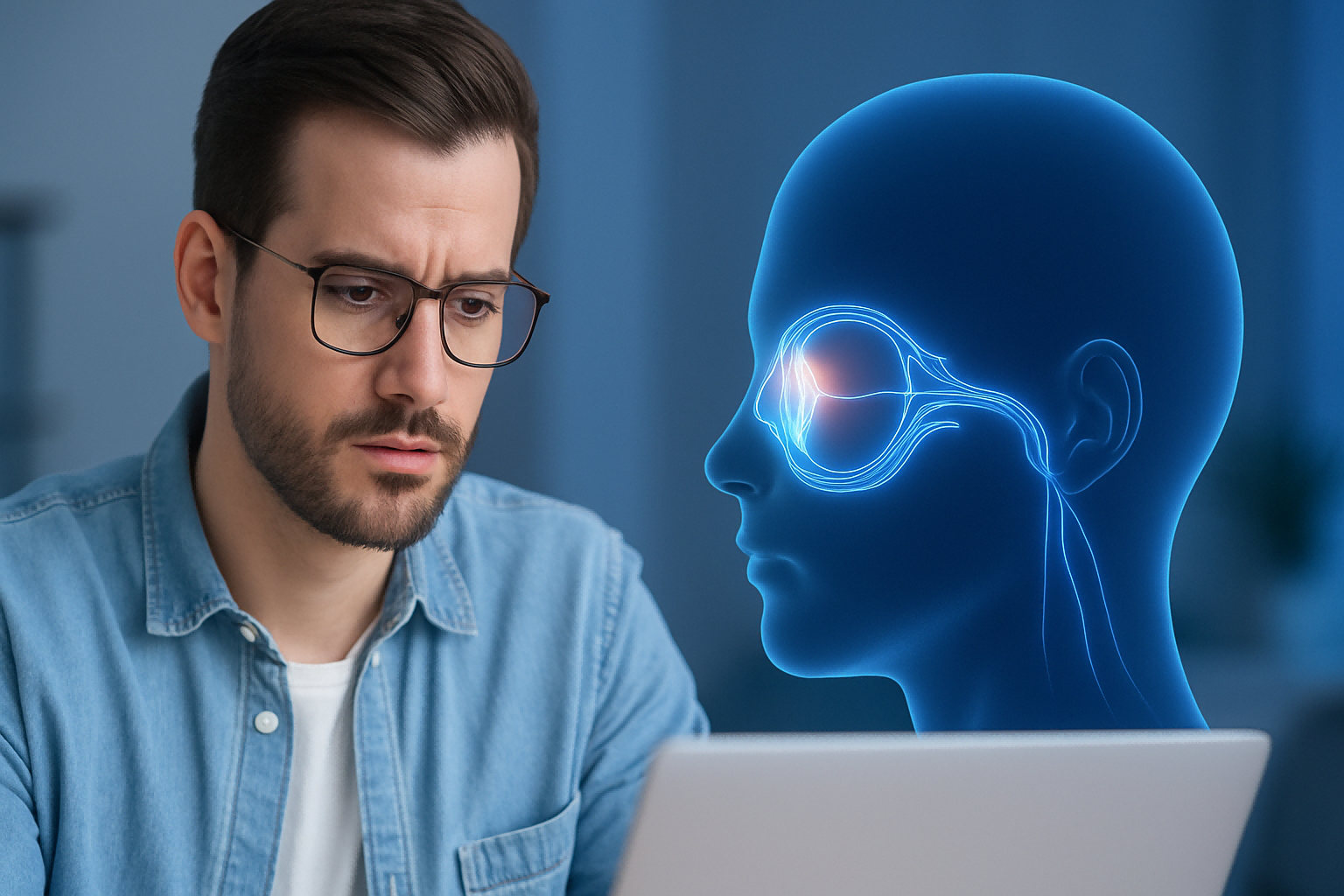
1. Stage One: Reduced Blinking and Tear Film Instability
When you focus on a screen, your blink rate drops significantly.
-
Normal blinking: about 15–20 times per minute
-
During intense screen use: often fewer than 5 times per minute
Reduced blinking leads to:
-
Poor tear film renewal
-
Faster tear evaporation
-
Dry spots on the corneal surface
This is usually the first noticeable sign of digital eye strain, often felt as dryness or irritation.
2. Stage Two: Continuous Focusing Stress and Temporary Blur
Screen viewing relies heavily on near vision. To keep images sharp, the ciliary muscle remains contracted for extended periods.
Over time, this causes:
-
Ciliary muscle fatigue
-
Slower focusing response
-
Temporary difficulty shifting focus from near to far
This “pseudo-blur” is not true vision loss, but a functional fatigue of the focusing system—commonly mistaken for worsening eyesight.
3. Stage Three: Increased Load on Retinal Photoreceptors
Screens emit light with:
-
Concentrated spectral output
-
High contrast
-
Continuous stimulation
This keeps cone cells in a sustained active state, leading to:
-
Reduced light sensitivity
-
Increased glare sensitivity
-
Discomfort under bright lights
At night, this can also impair dark adaptation.
4. Stage Four: Prolonged Visual Nerve Excitation
Long hours of screen exposure do not only affect the eye surface—they also influence the visual neural pathways.
Studies show that prolonged visual input increases optic nerve activity, which may result in:
-
Persistent eye fatigue
-
Reduced visual comfort
-
Difficulty relaxing even after closing the eyes
This explains why many people feel their eyes are “still tired” even when they stop looking at screens.
5. Why Symptoms Feel Worse in the Evening
By the end of the day, multiple factors overlap:
-
Tear film has been disrupted repeatedly
-
The focusing system has not fully recovered
-
Visual nerves remain overstimulated
-
Ambient light is lower and pupils are larger
Together, these factors amplify the discomfort associated with screen time vision, making dryness, blur, and soreness more noticeable at night.
6. What Happens If Digital Eye Strain Becomes Chronic?
Without proper adjustment, long-term digital eye strain may lead to:
-
Chronic dry eye symptoms
-
Reduced focusing flexibility
-
Increased light sensitivity
-
Slower visual recovery
-
Lower tolerance for prolonged visual tasks
These changes develop gradually, not suddenly, and often go unnoticed until discomfort becomes persistent.
7. Supporting Eye Recovery in a Screen-Dominated Lifestyle
1. Restore blinking and tear stability
-
Consciously blink during screen use
-
Maintain adequate humidity
-
Avoid uninterrupted screen sessions
2. Give the focusing system real rest
-
Alternate between near and distant viewing
-
Limit additional screen time after work
3. Use gentle optical rhythm relaxation
Compared with strong mechanical or pressure-based methods, stable light-based visual relaxation may help:
-
Reduce residual neural stimulation
-
Support visual rhythm recovery
-
Improve overall comfort after screen exposure
Such approaches are more suitable for managing long-term digital eye strain.
A full day of screen use triggers a chain of changes—from tear film instability and focusing fatigue to retinal stress and prolonged neural excitation. Digital eye strain is not a single symptom, but a cumulative process affecting the entire visual system.
In a world where screens are unavoidable, protecting screen time vision means giving the eyes a chance to recover their natural rhythm—not simply enduring continuous stimulation.
Prdoucts Categories
Recommended for you
Seeing Clearly ≠ Seeing Comfortably: Why Visual Endurance Is Gaining Medical Attention
What Is Magnetic Electrode Design? A New Trend in Eye Care Devices
Are Eye Treatment Machines Suitable for Everyone?
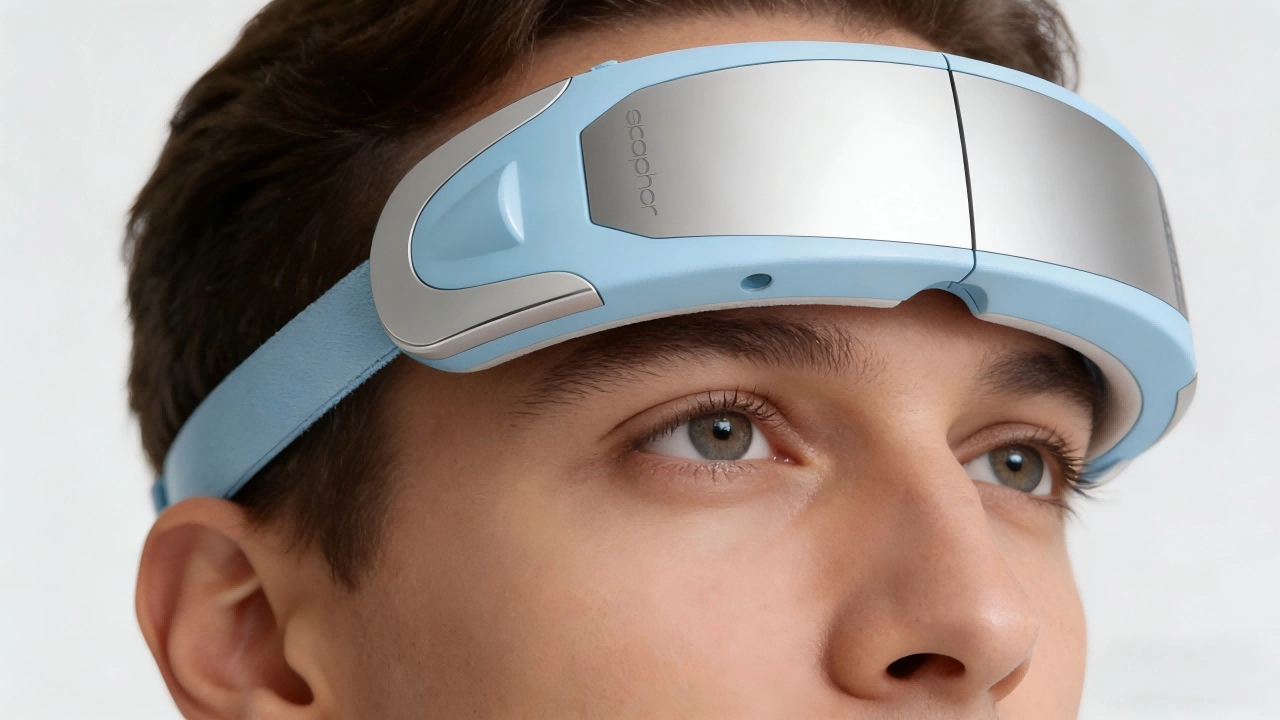
Eye Care Instruments: Why Skin-Contact Materials Matter More Than Specs
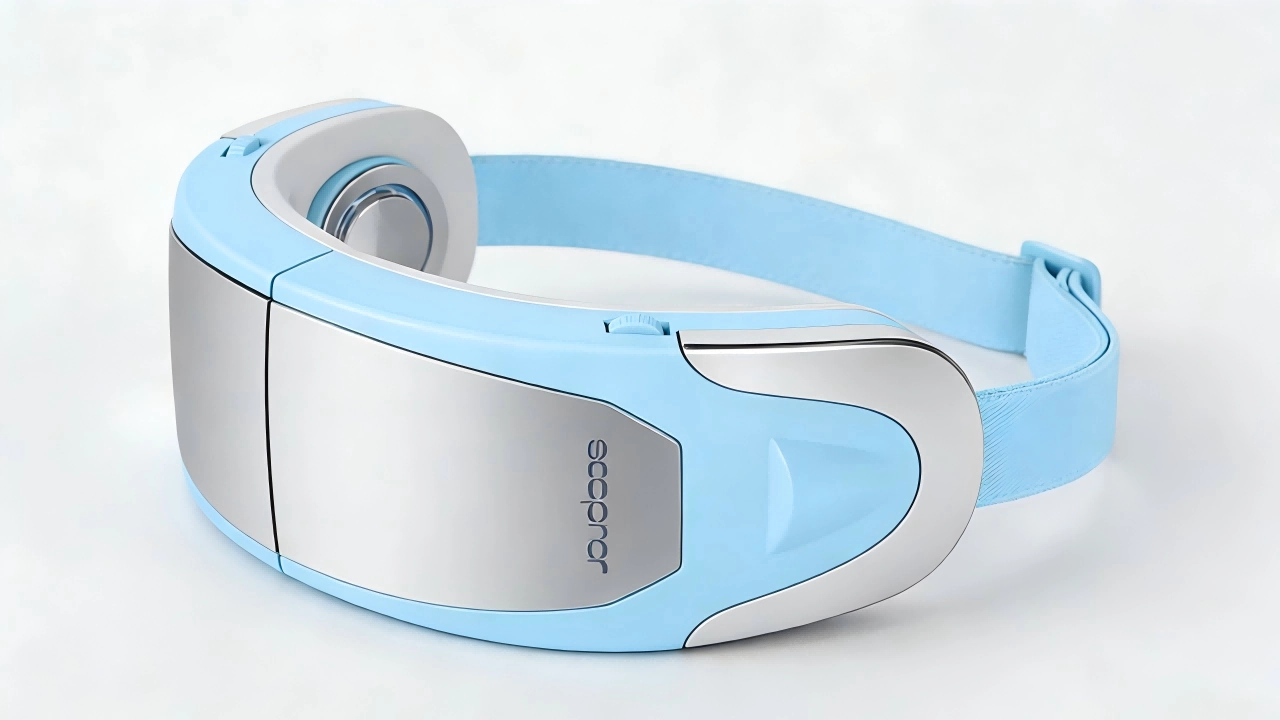
Eye Caring Instrument Design: Three Details That Matter Most
Prdoucts Categories
Prdoucts Categories
FAQ
Customized Service (For OEM/ODM)
Is there a white-label version?
We offer a completely unbranded standard version of the solution, which is especially suitable for B-end customers such as medical chains and ophthalmology clinics for private label customization.
About Company
What is the background of the R&D team?
The core team consists of experts from Zhongshan Ophthalmic Center and PhDs in optoelectronic engineering, and owns 15 patents related to visual rehabilitation.
Do you have any overseas market access certificates?
We have obtained CE (MDD), FCC, ROHS, and EMC certificates and can assist in target market registration.
Do you accept factory inspection?
We support factory inspection and audit, you need to make an appointment in advance and sign a confidentiality agreement (provide a demonstration of GMP workshop and quality control process).
Logistics and Customs Clearance
Does it support cross-border logistics?
We provide CIF service, and we have exported to Japan and Korea/EU/Middle East/Asia and other markets.
-
Contact Us for More Details
-
-
For custom designs, competitive pricing, or strategic partnerships, reach out to us. We'll get back to you promptly—usually within 24 hours.
-
Ruiheng Technology--Global Eye Protection Technology Innovator.
Contact Skaphor
Email: admin@skaphor.net
Address: Room 406, No. 101, Wanghu 1st Road, Baiyun District, Guangzhou, Guangdong Province, China.
© 2026 Skaphor. All Rights Reserved.
zhu Juliy
Skaphor_ Juliy